
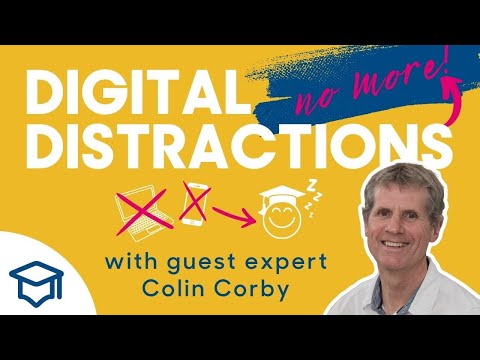
Follow digital detox expert & TEDx speaker Colin Corby’s fun micro-challenges to ditch the distractions and boost your productivity right now.

Episode Transcript
This episode transcript has been AI generated and edited by our team, for your convenience and accessibility.
William Wadsworth: 00:02
Hello and welcome to the Exam Study Expert Podcast. I’m your host, William Wadsworth, learning and memory psychologist and specialist private coach, teacher, and author in effective exam learning. If you’ve got a challenging exam to prepare for, then you’re in the right place. I also do a lot of research. I’m quite an active independent researcher in figuring out the best ways to learn, how to help students put them into practice, and in particular, some of the things that students find difficult about their independent learning.
One of the questions I’ve asked in my research, I’ve asked over 75,000 students to date. I’ve asked them about some of the things they find difficult in their learning and some of the factors that cause challenge. And one of the big factors that comes up over and over and over again is the challenge of avoiding distractions and staying focused. We’ve dipped into the topic of distraction and focus a number of times on the podcast over the years.
One of my all-time favorites was episode 60 with Professor Stefan van der Stiegel, a particular favorite from the archives. Today I want to continue helping you with this particular challenge.
And I’m delighted to be joined today by technologist, TEDx speaker, and thought leader on digitally detoxing our lives, the wonderful Colin Corby. Fellow Brit here on the show. But it’s nice to be, it’s nice to be coming home. Many of us know that we want to be more focused. We want to be less distracted. We want less of an impact of tech distraction in particular in our lives, in our work, in our study. And Colin has dedicated his life to figuring out some of the best practical tips and steps we can actually take to putting that idea into practice.
So often, as we talk about on the show in various contexts, you know, we might know what we need to do, but actually taking action on that is not always straightforward. And I think this is one of those areas we know we want to be less distracted, but that’s kind of easy to say. How do we actually do it? How do we actually put that into practice? Uh, how do we actually break often what are quite ingrained habits? There are some great ideas coming up today that’s going to help us all with those challenges. So without further ado, let’s meet Colin and dive right in. Colin, a very warm welcome to the Exam Study Expert Podcast. Thank you very much, William, for inviting me. It’s a great pleasure. Colin, just tell us a little bit about uh who you are and how you came to be interested in the work you’re doing now.
Colin Corby: 02:26
Okay, so uh I’m Colin Corby, I’m CEO of technology wellbeing, um, but I’m also the digital detox coach, which I created in 2018. And long story, in my mid-30s, I had a fantastic job in technology companies, suffered stress without realizing it. Um, the heart rate went up and up, and I started to see stars and pass out of work. So I uh had to do something about it, had tests, nothing came up, um, decided to take up sport and get fitter because that trains the heart. I went to the swimming pool because I remember being good at swimming. I was rubbish, absolutely rubbish, but I persevered because I had to balance a stressful job with you know life in general. So I learned all the strokes, started racing, did four IMN triathlons, um, done some distance swimming. But during that process, I was fascinated by how exercise, the mind-body connection and all of those great things changed how you thought, changed what you could do.
But then in about 2012, like everybody else, I found myself spending more and more time on my digital devices. And I thought, well, this is strange, you know, and I I wasn’t getting enough time to exercise, which I knew I had to do to have that balance with working technology companies. And so I did lots of research, studied a lot about behavioral psychology, habits, how we can be influenced by environments and all those great things. And in 2018, I created the digital detox coach to help other professionals in getting a more sustainable balance between the technology that we have to use in order to live and work in the real world, and what we need as biological animals to be healthy and fit.
William Wadsworth: 04:20
Well, so talk us through some of the big challenges then of having too much tech, too much distraction, too much screen time. What are some of the big ways it affects us all?
Colin Corby: 04:29
So when we’re online, it’s like being in a sweet shop. Now I love chocolate. And if I’m in a sweet shop, I’m going to eat some chocolate. So when we’re online, whether it’s on our smartphones or our laptops, it’s like being in that sweep shop. There are loads of fantastic apps. There are loads of distractions, there’s loads of instant gratification, shiny things all coming at us at once. And we get bombarded with all of these great things. And it’s very difficult when we’re online to then have a sense of time for ourselves. And we forget that we’re actually biological animals and we need certain things for ourselves.
And what happens? Lots of unintended consequences. We may not get enough sleep because we’re on our devices last thing at night. We don’t move about as much. Now, this was happening before the advent of smartphones, but we’re probably 30% less active than in the 1960s. And this has got consequences, and some reports suggest that inactivity is responsible for as many deaths as smoking, which is about one in six, I believe. But we’re not we’re not giving into nature. We’re not um speaking to other humans. Now, when we’re online, we’re the most connected people ever in a human race. And during the COVID pandemic, it was absolutely essential to have that connection. But being connected online isn’t the same as being connected with other humans. And it shouldn’t be instead of.
So in many countries, the US particularly, but obviously the UK, there’s there’s things like loneliness epidemics, because we’re not doing those basic things. We’re not getting in nature, our attention spans are getting shorter, um, there’s lots of unintended consequences. So our long-term health and well-being is impacted by the unintended consequences of our technology. And so what I do as a digital detox coach is sort of try and bring it back to say, look, it’s all about balance. What are the things that we need as biological humans? What are the things that we actually ourselves want to do? And then what are the things that we love to do and need to do online and get that balance right?
William Wadsworth: 06:55
Right. Right. So, I mean, there’s there’s obviously a lot of kind of wellness concerns. You know, you mentioned the sleep, the exercise, the human connection, all really, really important stuff. And obviously, you you’ve had a kind of a personal background of some with some of the challenges that what about some of the sort of specific like productivity challenges? So, you know, for someone trying to get their studying done, get their get their homework, their exam preparation done, you know, if we’re constantly distracted all the time, like what’s that doing to our productivity, our brain’s ability to learn, be creative?
Colin Corby: 07:28
Yeah. So that now here’s the funny thing. Our brains can’t multitask. Um, the human brain can’t actually do two things using the same cognitive resources at the same time. But what it does is it switches really quickly. So it fools us into thinking we can multitask. Now, of course, you could say, well, you can walk and you can talk and you can do lots of things, because the overlap in cognitive resources isn’t isn’t that great. But if you’re looking at your phone, you will walk into other people more often because you don’t have your your full capacity. So multitasking means that if we try and do too many things at once, and if we’re distracted by too many things, our brains are stopped starting all the time. And that means that we’re not as productive as we could be.
Now, one of the things about distractions is it’s it’s an evolutionary thing. We’ve evolved to be easily distracted. It was very important to our survival. But for most of us these days, we’re we’re not in danger of being eaten by any wild animals or attacked by other humans. But we’re still distracted, so we’re distracted by our smartphones instead. But coming back to the sweet shop, if you’re online, willpower isn’t enough to be able to manage all of those distractions. A lot of those distractions will trigger unconscious habits. So with digital detox, it’s almost like a digital habit off switch. You come offline into an offline environment, um, and so you reduce the amount of triggers that you have that would distract you. So for people um studying or learning new skills, um, what you try and do is you try and use environments and the knowledge about how we’re so easily distracted to your advantage as a smarter skill. So you take yourself to an environment where there are less distractions.
There was some good work by Professor Gloria Mark, and I don’t know how she did this, but she uh arranged for a company to switch off emails for one day, and then she measured the attention spans. And our attention spans have been getting shorter uh over the years, from something like two and a half minutes down to 47 seconds. And she found the attention spans of those information workers actually went up when they switched their emails off. So distractions affect our productivity, but they also all of this constant switching um creates more stress.
William Wadsworth: 10:20
So we’re both less productive, we get less done for every hour we spend. And and we uh we we don’t feel as good, we feel more stressed. So okay, so uh just before we kind of dive into some of the more the the practical steps, you know, what what we actually do and and you started to talk us through that, but before we kind of explore that a little bit more deeply, uh are there any other sort of good good studies or bits of research that you like, either in terms of like neuromechanisms or or kind of the the effects of of distraction and tech on us? Uh anything that you’d like to talk about that you think might be interesting to share just to just to add a bit of colour to it to all you’re saying?
Colin Corby: 10:56
So we’ve we’ve we’ve looked at environments and how environments trigger our unconscious habits. That’s a great one. Um reading online isn’t the same as reading physical books. And the reason is the distractions. You’ve got hyperlinks, you’ve got adverts, you’ve got all of these other things. And so if we’re reading online, if we’re doing most of our study online, the way that we read is more superficial. And uh studies have shown the Z patterns and one or two other things compared to reading offline, and when you read offline, um, you tend to read in a deeper fashion. Uh some parts of the brain take longer to kick in.
So if you’re reading a novel to get into a character, to feel what that character feels, to understand maybe a problem in its depth, um, the human brain needs longer to do that. If we try and do that online, then we’re we’re in a shallow form of uh uh of reading. So that’s an interesting area. Um the other one is that I think it was Professor Wendy who did a load of studies about how long it takes to establish habits. And I think she measured on average 66 days, but it could be 200 days, it could be much shorter depending on complexity. So the thing that I find fascinating is if we want to change our digital habits, we almost have to think like uh an athlete. So if we decide to run, let’s say, the London Marathon, on day one, we can’t actually run a marathon. We have to do some training, it takes some time. And the same is true if we want to make any changes in habits. It’s going to take some time, it’s going to take repetition and all those other um good things. So there is an instant success if we try and change something. So let’s say our attention span is, you know, very, very short, then we’re going to have to train to get our attention span and our focus uh up to you know a longer time period. So everything we do offline can be hard work and takes time. But everything we do online is easy and instant gratification.
But the danger now, the real one now, is this there’s some brilliant studies on the impact of AI. We we were f very familiar with the Google effect or digital amnesia, which is if you it simply if you use a satnet, for example, to get from A to B, you know how to follow the instructions and you get to your destination. But you don’t remember how you got there when compared with doing it via a map. If we want to learn something and we’re using online resources all the time, we’re outsourcing that knowledge and we’re replacing it with, I know where to get it because I can Google it. But we don’t necessarily have that knowledge within us to be able to use. Now with AI, we’re actually we have the capability to outsource our thinking too. And so there are lots of things I I can ask AI to write me an email. I can ask AI to read an email, to summarize the book, and do all of those other things. And and all of a sudden I’ll be out of practice. But what if I never learned those skills? And so there’s some studies coming around now that’s looking at the impact of that. And uh there seems to be a reduction in critical thinking and problem solving through outsourcing to AI. So that’s the really the interesting part of where we are now with technology.
William Wadsworth: 14:52
Interesting. Interesting, really interesting stuff. So if we are then looking, so we we talked a lot about the the different challenges of of all of this. And and if we’re looking to uh as we sort of talk about earlier, do something about it. So so we’re we’re looking to to to to reduce the impact of of tech, distraction on our on our life. Uh, you know, maybe we’re in the habit of you know having our phone out when we’re doing our our our homework, our exam prep, our revision each night. Um, you know, and we’re trying to kind of step back from that. How how do we how do we start? What are sort of the simple practical steps you’d suggest to someone looking to dial down the impact of of tech on our on our life?
Colin Corby: 15:29
Okay, so there’s there’s there’s two quick and easy wins. The first one, particularly if you’re studying or learning anything new, is to protect your sleep. There’s lots of important stuff that happens when we’re asleep, and memory consolidation appears to be one of them. And so getting off your smartphone at least an hour or so before you go to sleep is really important. And and why is it important? It’s the it’s the external stimulation. You get overstimulated, and then if you go to bed, it takes you longer to sleep. So that’s that’s an easy win for everyone. The second easy win is to use environments. So if you know you have to do something, then create an environment that minimizes distractions. And that tends to be an offline environment. There are lots of things you can do with your online environment, but you’re still prone to distractions because the mere presence of all of that technology close to you will distract you. So if you’ve got something really important to do, create an environment where you do that one thing and you don’t get easily distracted. And that tends to be an offline environment. So that are two um quick wins.
William Wadsworth: 16:44
The smartphone an hour before bed. Sounds sounds easy to say. I know it’s a big challenge for some listening. Um you know, we’re we’re so we’re so kind of wired into that. We’re saying it’s such a part of our daily habit. And and some people might say, well, well, it’s okay because I use night shift mode.
Colin Corby: 16:60
No, there’s a there’s an issue there. Um there’s been some research, and uh I love the expression, the mere presence of a smartphone, whether it’s in your pocket or in a bag or close to you, exerts a cognitive pull, even though you don’t realize it. Um, a smartphone next to your bed exerts a cognitive pull. So if you wake up at night, it’s very close to you. You might even look at it. So the trick is to move your smartphone a substantial distance away from you, so it doesn’t have that cognitive pull. There was some great research on um students taking exams. And they did some students that had um a smartphone, you know, with them in their bags, and those that didn’t have, and they they they noticed an improvement in the scores of the students without the smartphone near them. So this mere presence, although we’re not consciously aware of it, uh has an impact. So get the smartphone out the way if you want to do anything. And let’s say you want to do something on your laptop, still get your smartphone out the way, because then you’ve got rid of some of the distractions.
William Wadsworth: 18:13
Yeah, I think it’s really interesting. So I I mean, in sympathy to those that might be struggling to break the first habit and their their phone before bed, I think everything you’re saying, you know, I completely agree. The research definitely supports, doesn’t it? And like the the the way I might go about that if I’m if I’m maybe maybe struggling to actually act on that advice is is think about you know, how can I you know a little a little bit like uh perhaps dieting advice, you know, it’s not just about what you remove, it’s about what you what you the switches you make. So so you know, if you’re trying to cut down on your sugary stuff, like what are you snacking on instead? Yes. Don’t just like remove the sugar and and like not have a plan for what you’re replacing it with.
So so I might be thinking in terms of, oh, like what’s a book like I’ve really, really enjoyed in the past, and and you know, really treat yourself to that book and and dive back into it again, or or maybe um you know go to a go go into go into town and and treat yourself to a to a to a to a magazine or something you know analog that that will really like be really really compelling, really interesting. You know, you’ll look forward to it and and then it won’t be such a such a difficult shift to make. Um in terms of the the advice about getting the phone away when it’s time to to work, time to study, I think that’s great advice as well. And I think the thing I’d you know always want to remind people of is the more we can do that, the quicker we’ll get the work done because you’re more productive, you’re less distracted. It’s you get it done faster, and then you sort of have more proper free time later.
When it comes to study tasks where you don’t have a choice, you know, you have to be on your laptop. You know, you were talking about where you can kind of remove distractions. So maybe you turn your phone off, even you have to be on the laptop. You know, I always think it’s interesting to explore. Well, do you do you have to be on your laptop? Do you have the option of printing it out? You were talking earlier about the the power of sort of analog reading rather than online reading. You know, maybe you can use paper flashcards rather than digital flashcards. We’ve explored that on the podcast in the past. And then if the answer is well, that I really need to be on my device, I really need to be on my laptop, then how can you remove as many distractions, as many notifications from that device as possible? And I’m sure this is something you you you talk about as well. So yeah, thoughts for us on that. So we have to be on the device. How can we make it kind of as clean as possible, I suppose?
Colin Corby: 20:17
So one of the ways of making it as clean as possible is to make sure that the thing that we have to do is the only thing that’s available to us online. Although there’s the other distractions that we don’t activate those other distractions. So let’s say um you’ve you’re reading a paper, you’ve got to read a paper, then download that paper onto your laptop and then move to an area where you don’t have Wi-Fi, for example. So you can use your laptop for that reading experience because you’ve downloaded it.
If it’s an online uh activity, you can promise your brain that I’m going to do this activity now without distraction for the next 40 minutes or an hour, but then I’m gonna take a break. And in that break, um, those things that create the greatest pull, I’m gonna do those things. So you’re not necessarily abstaining, you’re deferring some of those things that pull you. Everyone is different, so there may be something we may need to check up on friends or family, whatever it is. Promise yourself that when you’ve done that 40 minutes, you can then do that. But the other thing is when we have to work online, we have to also promise ourselves offline breaks, 15, 10 to 15 minute breaks in order to restore our focus and attention. Now we’ve all been online, particularly in the afternoon, um, and our energy levels sag. So, really, we’ve got to have regular breaks to get up, to move around, um, to refresh ourselves so we can reapply ourselves. So, yeah, so if you have to be online, avoid getting rid of as many distractions as possible. Promise yourself you can do the things that you feel I’ve got to do those things online um at a certain time, and get up and move about as much as you can.
William Wadsworth: 22:22
Yeah, yeah, nice. Are there any other um sort of practical tips you’ve got for us that we we haven’t covered already that might be good to throw in?
Colin Corby: 22:32
There’s a lovely one. Uh so I create lots of challenges. And what a lot of people say, well, I’m not really I’m gonna use the word addicted, but it’s I’m using a common use of that word rather than it means bad habits. It doesn’t mean addicted in a medical sense, but we’ve got lots of bad habits. But I notice someone else’s bad habits, but I don’t really notice my own. So self-awareness. So um if you spot people that are anxious if they don’t have their smartphones with them, or if they have to pick them up first thing, last thing, night, and all of these characteristics, or instantly respond to notifications. Observe those in other people and then ask yourself the question, well, do I do that?
Um, so I’ve got lots of challenges, and the one that I think is the funniest is the just one thing challenge. And the just one thing challenge uh is devilishly hard, and that means you’re only allowed to do one thing on your smartphone. So let’s say um you’ve got a thing about the weather in the UK. Obviously, we have a thing about the weather. You’re only allowed to look at the weather app on your phone, and then you must come off and for at least five minutes before you’re allowed to do another one thing. So it’s a just one thing challenge just to start training you. There’s lots of uh human connection challenges. So human connection challenge is that you decide to come offline and instead of sending that text message or that email, you give them a call, a voice call. Or you go and meet them and have a discussion. Um, or instead of looking at that, you know, really great cat video on TikTok by yourself in your own room, you decide to do it with a friend. So you socialize being on uh line, and then the there’s a funny one, if you’re with your friends, it’s a bit like exercising. If you’ve got friends to exercise, it’s actually much easier because they hold you accountable. You could all agree that when you’re with your best friends, why not talk to them instead of being distracted by your phones and even have some um some funny consequences if someone does it. Have a laugh. Oh no, I picked up my phone. Have a funny consequence. So make it fun as well.
William Wadsworth: 24:58
Yeah, yeah, I like that. I mean, yeah, just one thing. I mean, I’ll I’m definitely gonna have a go at this. I can see already, it’s it’s hard, it’s hard. But sometimes the hardest things to do are the things we most need to do. And benefit from them.
Colin Corby: 25:12
Yes, but also don’t beat yourself up if you fail. Give your phone, smartphone a name and say, ha, you got the better of me that time, but next time I’m gonna do better.
William Wadsworth: 25:22
I love the idea of naming it. That’s fun. Amazing. So so we put all this together and we we start to move in the right direction. Um, making some changes. You talked about it’s not going to be necessarily a big overnight, big bang switch, but you’ve got to think about it like an athlete training, gradually working on building up the habits. What are some of the benefits we can look forward to? Paint us a rosy picture of tomorrow when we start to get some of this clicking into place.
Colin Corby: 25:44
So if you have this mindset of an athlete where things are going to take time, you’re building on lots of small steps. So one of the benefits will be that you will have a simpler life where you’re online for the things you must be online for and you’re offline. So you’re fully present in both environments. Now being fully present means that instead of just hearing people, you’re actually listening to them. And you’re picking up all of the communication and you’re getting more enjoyment from being with people. Because you’re not multitasking, and because you’re focusing your attention on one thing and not on all the others, then you’re actually more likely to remember what it is that you’re focusing on and you’re experiencing that. Attention’s a bit like a spotlight. You focus it on one thing and not on others.
But if you’re always doing that, um lots and lots of things, you’re taking in less information. So you’ll find those things that you had to remember, or those ideas, they come easier to you. If you’re not constantly being distracted, you’re reducing stress levels. When you do reduce stress levels, you’re opening up the mind to be more creative. But also you’re you’re dulling down the noise in your mind. So those things that you have to remember just come to you more easily. So for example, I I do a lot of memorization. And the worst thing that can happen is if you’re thinking consciously, you’ve got to allow the the play words to come up into your mind. If you’re an exam, you you don’t want all of this noise going on in your conscious mind. You just want to be in the zone. So there’s uh and you’re healthier because you’ve made time to do the exercise class or the walking or to the being in nature or playing the piano or anything else that you really enjoy, you’ve made time. And so it’s a more complete life. It’s counterintuitive because you’re no longer making yourself busy just because you don’t want to be busy. You’re actually doing productive things. And uh it’s it’s a much better way of living.
William Wadsworth: 28:06
Yeah. Wonderful. Wonderful. Well, on that note, Colin, um, thank you so much for today. That’s a that’s a beautifully positive note to to round up. They say thank you. For anyone that’s interested in finding out more, where might we want to go next?
Colin Corby: 28:20
So here’s the funny thing. I’m a digital detox coach, and I’m going to say the website. Because we all have to live and work. Um so the website is a great place. There you can contact me, there’s some free resources, and there’s uh links to other places. If there’s an area that you specifically want help with, just contact me and then I’ll put a small article uh available in in one of my Substack blocks or on the website.
William Wadsworth: 28:49
Fantastic. Well, Colin, thank you so much once again. And uh yeah, let’s go let’s all go and uh get digitally detoxed. Thank you. Well, thank you, Colin, for a wonderful conversation today. Lots of really useful ideas for us all. And thank you, dear listener, for tuning in. As always, it’s been such a pleasure to have your company.
Now, if you’re going to take action on today’s episode, if you’re inspired to do something slightly differently, to take on board one of Colin’s tips or steps, can I gently suggest taking a moment now at the end of this episode to write your intended action in the comments section? Particularly if you’re listening on Spotify or watching this on YouTube, we have quite an active comments section on both of those platforms. If if you you’re tuning in to us through either of those, you Spotify or YouTube. And the the real magic is by articulating your intention, by sharing uh with us all what you’re planning to do. You commit to it in your head somewhat publicly. And the chance of you actually implementing that goes way up.
We’re much more likely to actually take that action and stick with it if we’ve written down that intention and particularly communicated it uh in a somewhat public way. Um we are all cheering you on to make that positive change in your life for more information. Focus and less stress each day. I, in particular, am cheering you all on in your bid to be as effective as possible in your study habits. And so I’m going to read all the comments that come in on this, and I’ll leave a virtual cheer on each one to help you on your way. So I do encourage you to take a moment to do that if you’re on a platform that supports comments.
As always, please do also consider sharing the episode if you know of someone this can help, either this particular conversation or of course the show more generally. We always love it when people share the show. It’s one of the main ways people find out about us, and it’s a great way to spread the word and help someone in your life. For now, thank you so much, as always, for tuning in today. It’s been great to have you with us, and I want to wish you every success, as always, in your studies.
In this episode, learn how to conquer distraction and build a healthier relationship with technology using quick wins for a digital detox.
Our guest is digital detox expert, technologist and TEDx speaker Colin Corby. We explore how constant digital distractions affect attention span, deep learning, reading comprehension, critical thinking, sleep, and productivity — especially for students.
Colin shares practical, realistic digital detox strategies, quick wins and fun micro-challenges you can apply immediately to areas including environments, routines and social accountability.
Your post-listening task: share your own digital detox intentions in comments below for that accountability, our best encouragement and support.
**
About today’s guest, Colin Corby:
• Discover more resources on his website: https://thedigitaldetoxcoach.com/
Hosted by William Wadsworth, memory psychologist, independent researcher and study skills coach / trainer. I help ambitious students to study smarter, not harder, so they can ace their exams with less work and less stress.
WANT ME TO SPEAK AT YOUR SCHOOL? Learn more at: https://examstudyexpert.com/revision-workshops
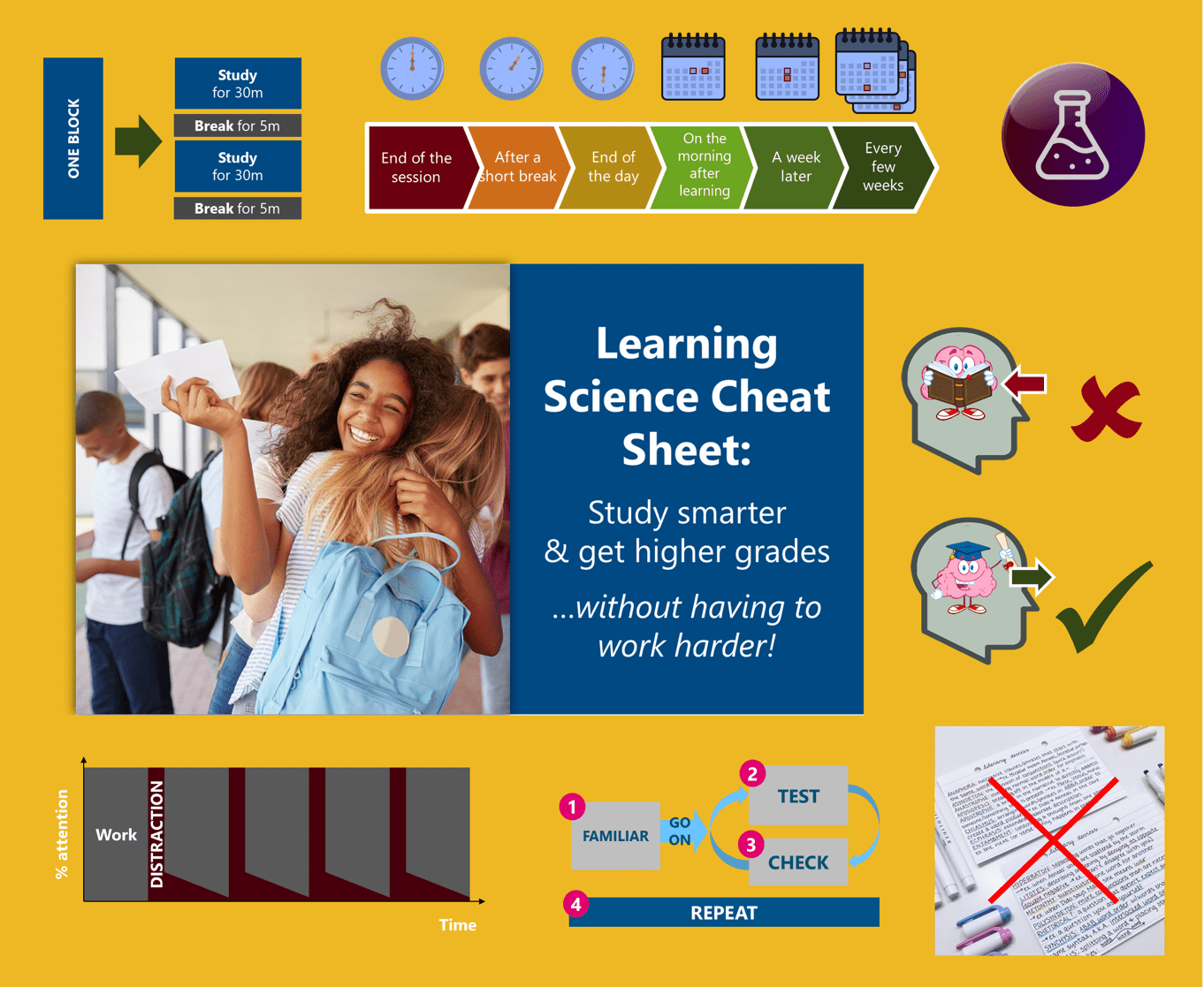
Get a copy of my ultra-concise “6 Pillars Of Exam Success” Cheat Sheet at https://examstudyexpert.com/pillars/
*As an Amazon Associate, we may earn from qualifying purchases, at no extra cost to you. We make these recommendations based on personal experience and because we think they are genuinely helpful and useful, not because of the small commissions received.
Podcast edited by Kerri Edinburgh.

