

Join author, teacher and expert Dr. Kimberly Horn in an exploration of social connections, friendships and loneliness in student life.



Episode Transcript
This episode transcript has been AI generated and edited by our team, for your convenience and accessibility.
Hello and welcome to the Exam Study Expert podcast, my friends. Today we’re talking about the power of social connection, why it matters to us all, and especially to us students and scholars. We’re gonna be talking about how we can nurture those all important friendships and social connections even when we’re super busy, and even when we don’t perhaps make friends or feel we make friends that easily.
This episode forms part of our occasional wellbeing series, focusing on all those things, all those ingredients that help us be as successful as we can be in our scholarship. We talk about things like managing your mental health, your wellbeing, stress, anxiety, and the power of social connection is a really important component of that that we’ve not really talked about at all on the podcast before.
To help us navigate this, I’m delighted that we’re joined by the wonderful Dr. Kimberly Horn today. Kimberly is a long time professor, a research psychologist and author currently Tech University. Her message is clear. There is very substantial evidence that social connections are an important component for not only mental, but even physical wellbeing. I came across Kimberly’s work, recently via her wonderful book, Friends Matter for Life, which I’d highly recommend, and was immediately very keen to bring her onto the show to teach us more. when I’m talking to my students, my clients in my coaching work, so much of the time, those kind of social connections at school, at university, you know, even for some of the professionals I coach, that kind of social component can be a real sort of source of things that we worry about. It can be real source of kind of tension, anxiety. And when we get it right, can be real source of support and a hugely valuable part of our ultimate success in our scholarship and in our having a nice time as a human being generally. So we’re releasing this episode in September. As I mentioned in the episode a couple of weeks back, September always feels like back to school season for me. So many new terms and semesters get underway for so many of us. So perhaps a particularly good episode if you yourself are starting out at a new school, new college, new university at the moment. that’s you, then Kimberly has some very nice, very gentle, very practical ideas us to help us build those all important as well as we’re kind of establishing ourselves perhaps in a brand new social environment. We’ll also be looking at specific suggestions to help if you’re especially socially nervous and taking a look as well at some ideas, know, if, and I particularly relate strongly to this recently, you know, if you feel like you’re just juggling a bajillion things and you find yourself struggling to keep up with friendships as a result. I’m thinking particularly perhaps of some of my professional clients here who are putting in, you know, all those hours of study for a demanding exam alongside a day job and perhaps even caring for a family too.
So lots of ideas, no matter where we are in our journey. And I think you’ll find a lot of really wonderful, really kind of actionable steps to take today. You know, this isn’t just a kind of a pep talk, this really matters. You Kimberly has some really, just really nice, really practical ideas that I think we’ll be able to kind of take away. And no matter where we’re at, no matter what we struggle with, there’ll be something useful in this episode that you can use to help you move forward. So I really hope you enjoy today’s episode. Let’s welcome Kimberly to the show.
[William Wadsworth] So Kimberly, very warm welcome to the Exam Study Expert podcast.
[Dr. Kimberly Horn] Thank you so much, William. I’m honoured to be here.
[William Wadsworth] We’re honoured to have you here. We’d love to just hear, give us your brief introduction to sort who you are and what you do.
[Dr. Kimberly Horn] My name is Dr. Kimberly Horn. I’m a research psychologist and professor. And I’ve been in the academy in the US for, it’s hard to believe, going on 30 years now. And I’ve spent a chunk of my career mentoring and training college students along the way both in the classroom and as part of my science and you much of my research over the past you know a couple of decades has really focused on public health and you know I’ve in my research I’ve seen how our health is so impacted by our social connections and you know as you’re probably aware there’s been an increasing loneliness epidemic. The world, all across the world which is a public health crisis. So more recently, I’ve taken my work as a professor and a scientist and tried to figure out how I can use both my research and my lived experience to address that loneliness crisis.
[William Wadsworth] So I wonder if you could share maybe a little bit more on kind of why connection is so important. There’s obviously there’s been a fair bit of work out there and, you know, perhaps just give us a little bit more colour on sort of the ways, you know, human connection can kind of positively impact people and how its absence can cause those challenges.
[Dr. Kimberly Horn] Well, I mean, when I recently turned my messaging around my research and my work to a book, and the book is called Friends Matter for Life. And in fact, they do. And my hope is that we can look at friendship as an antidote to loneliness, because it is something that’s available to almost everyone. And friendship as, as something that’s accessible to us to address loneliness, I think is important across a lifespan. And as you mentioned, research has shown us more and more, I mean, the evidence is indisputable now that loneliness can create a whole host of health issues from, I mean, not depression, anxiety, those sorts of things, psychological issues, but also our overall health, our physical health. mean, it’s been connected, loneliness has been connected to cardiovascular disease and dementia and mental acuity, a whole host of things. But on the flip side of that, when we are more connected, when we have those people in our lives that we can depend on and rely on.
We get all those feel-good hormones. We get those warm and cozy hormones and chemicals that just help us to be healthier, less stressed, more relaxed, more in tune with ourselves and those around us. So the list just goes on and on of the benefits. in fact, more just recently, the US Surgeon General underscored that our social health is just as important as our physical health.
[William Wadsworth] I mean, speaking for me personally, and I’m not proud of this, but, you know, when times get busy, as life has been for me personally recently, you know, I’ve got two small children and that keeps you quite busy. you know, it’s been a busy time sort of with my work and Exam Study Expert which I love. But it’s been quite a full life in recent years. And the thing that gave first and was lost to come back and I am happy it’s now coming back for me was connections with friends. And I don’t know whether that’s a kind of a common thing, you know, that’s, it sort of seems like a luxury sometimes when life is really busy and perhaps it shouldn’t be that way.
[Dr. Kimberly Horn] I think that is common. I mean, there are major transition points and I know your podcast has a large audience of college students and those who serve college students, maybe those who are getting ready to enter college and going to college is up there with the major life transitions that you just described, which is becoming a parent and getting more busy professionally. We experience these different transitions in life. our whole lives and there are times when friendships wax and wane in terms of importance and in terms of accessibility. But my point is that even through these transitions, we can find ways and should find ways to prioritize those friendships and connections in our lives. Because they matter especially more.
[William Wadsworth] Yeah. Hmm. Excited to talk to you about. Yeah, well, that’s the thing. It’s the time you need it. It’s like the old quote from the Dalai Lama, the sort of attributions of the Dalai Lama, it might be apocryphal, but you know, the busy businessman that says, Oh, I don’t have 10 minutes a day to meditate. And then he goes, Oh, well, then you needed it for two hours. The harder it is to fit in the more we need it sort of thing. And so I know, Kimberly, you talk about this term social terrain and, and you mentioned quite rightly that many of our listeners are either at school or college, university. You’ve worked in that environment for a long time. Firstly, what is social terrain to you and how would you characterize the social terrain of particularly big college or university?
[Dr. Kimberly Horn] Yeah, well, I mean social terrain changes throughout our lives, right? And I think that we have to learn to adapt and adjust to those different types of terrain at different points in our lives. And college, for example, or going to college, especially for the first time, creates a… a new kind of terrain. are situations and circumstances that we have to learn to navigate. And sometimes they require new skill sets. Sometimes they require brushing up on old skill sets. But when you think about college, going to college especially, and a recent study came out that I found very interesting that it was in the Journal of Adolescence, that a lot of times when students go away to college, they expect the terrain to be very similar in college in terms of making friends and connections as it was in high school. In fact, some students even think it’s gonna be easier. And in fact, it’s not for many, for most in fact. And where that delta lives and what they expect and what the reality is, is where loneliness can creep in.
And you think about the terrain of, let’s say, high school when you have more built in, a terrain that has built in conditions for connection. One, you’ve probably been with the same group of peers for, in some cases, maybe a decade, right? You’ve joined the same teams, you’ve been in the same classrooms, you’ve passed in the same hallways and stopped at your lockers, and you’ve been at the same lunch tables and maybe even the same bus stops.
That’s very familiar terrain. And when students go away to college, that terrain shifts significantly. And a lot of times, the whole geography is far more massive than what they might have experienced in high school. There are hundreds of new peers, new faces, new conditions for going to and from classes. You know, myriad ways to have meals and share meals with individuals. So that terrain looked very different socially than it did when they were in high school. And the expectations that things are going to be easier are not the case. And students can feel very behind quickly because there’s this expectation, well, I’m going to, you know, I’m just going to make, it’s going to be so easy to make friends and connections, all these people around me and that’s not the case.
[William Wadsworth] Certainly one thing I remember about my experience, you have a sense that you can do anything, but you can’t do everything. You can’t even do a tiny fraction of it. So yeah, it’s almost sort of overwhelming. Where do you even start? So certainly there’s that sort of challenge of transition. mean, any other sort of trends or challenges you’ve noticed among students as they kind of progress through the college? Their kind of time at college when it comes to sort of challenge, sort of staying connected.
[Dr. Kimberly Horn] Yeah, well, I mean, I’ve had because I’ve worked with so many, in fact, hundreds of students over the years. I’ve seen both sides, you know, seen the beauty and I’ve seen the struggles. I think there are two types of loneliness happen around this time period. One is the social loneliness of thinking like, I just don’t have that many people to hang out with. I’m not sure exactly where my tribe is right now. I don’t know the right people. And then there’s the emotional loneliness, which is sometimes more difficult to navigate because they feel like I don’t really have anyone who knows me deeply.
I don’t have anyone that I feel truly connected with. And that’s a big part, I think, when students go away to college. That’s a big part of what they miss with their familiar friends and families. Emotional loneliness can be very painful. So those are some of the things that I’ve certainly seen. Even though people may have crowds around them, they still don’t feel connected.
I think that’s important to know that that time period around 18 to 25 is a high risk period for loneliness in general because that’s when we’re starting to really think about who we are and our identity and where do we belong and who is our tribe, who are our people. And it also comes with autonomy and trying to figure out who you are without the rails and the… the guideposts that have been there your whole life, that makes it become even more challenging to find out who you are and who you belong with.
[William Wadsworth] Yeah, I wonder if I could just ask a little sidebar question. We’re building towards maybe talking about some sort of what could we do about all of this?
But I just wanted to ask quickly first, if I could, you know, I’m just curious, what was the motivation for, you know, your interest in this field and obviously getting to the point where you wanted to write a major book on the subject?
[Dr. Kimberly Horn] The motivation for the book came from many years of seeing how social connection our social networks are tied to almost every aspect of health behaviour. A lot of my studies were related to, let’s say, addiction, tobacco use in particular, physical activity, nutrition, those sorts of things. And in almost all of my studies, somewhere in the risk factors or somewhere in the protective factors, social support came through. And I think during the pandemic, I saw my research playing out all around me. It was a grand experiment for loneliness and social connection. like most people, had a lot of time to think during that time period. And it made me want to do more than another study because some of my math studies, my studies said were clear. So how do we translate that?
And get the message out of how do we better connect and why is it important for our health and our overall wellbeing? And I just kind of started dabbling and writing and thinking through how I could communicate this message through a book that would be read by more than a handful of people, which as we talked about earlier, William, you have a lot of academic publications, but geez, who?
Who reads all of those? And I’m lucky if each paper is read by 10 people. So I thought that perhaps a book would be something that could be more consumable and would reach more people and teaching them and sharing the message of why we need each other in this world, why community is important, why friends are important, why connection is important to just every aspect of our being. And I guess that’s, in a nutshell, how I landed here.
[William Wadsworth] That’s wonderful. Well, we should dive in, if you’re willing to talk a little bit about what we can So I’m sure this is a big monster open ended question for a specialist in the field. But but but kind of what are some of the big things we can think of?
[Dr. Kimberly Horn] One of the points I want to make right off the bat is to people who are listening as why this is important, particularly in the academic realm. We know that I like to think about friendship as a health intervention. I mean, it’s just good for us. And psychologically, I think it’s important to know that when we don’t have it and we don’t feel connected and you can be linked to anxiety and depression and various types of stress. Academically, when we’re lonely and disconnected, our concentration is less. It can lead to lower GPA and irregular attendance in class. And all the other things that affect performance, like sleep disruption and fatigue and just our immune system’s just not functioning at optimum.
You know, friends and connections can help buffer that. So I want to, I want to make that clear that that is the really the context of all of this is that especially given your podcast and your audience that this, you know, yes, we, there are particular ways we can study and perform and have our performance be, you know, heightened. This is also a part of that mix is making sure we’re taking care of ourselves socially.
And so I think if we’re setting some realistic expectations for how do we approach this, I think it’s very practical. So I don’t want people to overthink it. There are some real practical, tangible, step-by-step things that people can do, that students can do to enhance their relationships and their friendships. First, I… I want to normalize it, particularly those who might be going off to college or starting college for the first time. It’s very, very normal for it to take time to make new friends. It’s not something that happens in days. You know, it is something that can take, you know, weeks or months to nurture those kinds of friendships. And it’s common to feel lonely in the beginning, and it’s also temporary. So it’s something that people can sort of wiggle their way through and develop some skills to help get through. It’s a myth that you’re gonna make all of your best friends, the welcome week and from all these other initial activities that take place. It’s a skill and it takes practice.
I think, you know, there are some, there are no doubt there are some people who making friends is a little more difficult than others. And we can talk more about that if we want to get a little bit more nuanced. if I could just like talk about some, some daily habits. Let’s just say that, you know, you’re, you’re, starting your, your, your freshman year, you have a series of classes.
Sometimes it might help just to try to sit in the same spot in the classes that you go to and you strike up conversations with the people that also happen to sit there. There are those people who like to sit in the same spot and if you can sit in the same spot and you also have other people who are sitting in the same spot, that can certainly be a way to have conversation starters, particularly when it’s you’re feeling a little awkward about it. I think that as that starts to progress, it’s okay to invite someone to walk back to a dorm or a coffee shop or somewhere on campus. You walk together. Just say, would you like to walk and grab some coffee or whatever it is that might be something that you could do afterward with just one person. It doesn’t have to be a gang or a group. One of the things I like to recommend too, and I do this myself, especially if I’m going to be in new situations meeting new people is I keep kind of a running notes about people in my phone. And I think that that can be incredibly helpful. know, Sarah, English, loves to hike. know, just just brief notes to help me remember and enjoy my memory. And I go back to those. If I’m going to a new meeting or a new group, I look back on those because those help me start conversations, especially when it might be a little awkward and I don’t really know the circumstances that well. Use people’s names. people’s names. Smile. that you’re open to possibility of conversation.
Put your phone down. Look up, smile at people. Show that you’re open to conversation. Those are very important cues. I think we have to be careful about overlying on social media, too, for making our human connections. And I’m not dismissing social media. I value it. I use it. And I think it has a place.
When it comes to making new connections, I think that we can use it as a bridge and not as a way to just fully, that’s the only way that we communicate with people. And maybe you’ve, you’re connecting with someone, you’ve shared numbers, you’re texting, or maybe it’s a new online group. That’s perfectly fine, and those are ways to start relationships. But… I also think it’s incredibly important to find FaceTime with each other. There are things that I think that are important or to find, just to find your tribe, find your people, think about and let your passion guide that. know, are you, do you want to get involved in a faith-based group?
Are you physically active? Maybe it’s intramurals. Maybe it’s a cultural group. Maybe it’s some group that’s shaped around identity. Maybe you want to volunteer. So look for those sorts of activities that meet with your values and your passion and your identity. if it doesn’t, don’t be afraid to jump around and try different things. If something doesn’t feel good, you don’t have to stick with it. Do something else.
[William Wadsworth] Yeah, that’s such great advice and thank you so much for sharing those ideas. Certainly some things that I think, oh yeah, if I’d have my time again, I’d definitely bear that in mind. I’d definitely bear that in mind. So thank you. You mentioned, you know, you know, for some people it’s maybe a slightly longer process than others. And some people find that the making friends thing thing hard, know, classically, perhaps in the view of this, someone who’s maybe a bit more introverted than others and a bit more shy awkward. I personally would consider myself a little bit further down that spectrum in terms of naturally, you know, I’m a bit more like, oh, just I’ll keep myself to myself. But then, of course, we never make friends. We never make those connections. Do you have any particular suggestions for people with that tendency?
[Dr. Kimberly Horn] You know, I think that there are some nuanced advice that it is meaningful to maybe someone who’s shy or anxious, or maybe they have some type of neurodivergence, whether that’s ADHD or something else, where those situations are just kind of like nails on a chalkboard. It’s not.
It’s very uncomfortable and in some cases, you know, kind of scary. So I would say, you know, start small. You don’t have to be a big joiner, you know, if that doesn’t feel good to you, if it’s not comfortable. Again, I go back to the, you know, maybe focus in on, you know, sit in the same place in your classes or frequent the same places in the student center or in your residential facility so that a lot of times that breeds sort of familiarity and you’ll start to see the same sort of people. Maybe it’s you get comfortable enough to strike up a conversation and to be open, to smile when you can. And I realize that the retreat is important too, but to be aware when it feels safe to smile and to be open and to allow yourself to have that experience.
Again, I think keeping names and notes is very important because it’s something that you can fall back on for even if you have like conversation starters in your phone notes. I think that’s really important because conversation starters can be things that you might be uncomfortable with on the fly. But if you know some of them and you’ve rehearsed some of them and you have them close by, you can take a look at them and that can give you a little bit more comfort and security. Even if it just, hey, how’s it going? I’ve seen you several times here. How’s it going? are you in the storm? just have, maybe have two or three things that are easy conversation starters for you. The other thing is to really kind of reframe vulnerability. Sometimes people think that being the first person to reach out is, is weak and you know it’s not or they feel like they’re not they won’t be well received and so again those very brief conversation starters once things become more familiar. The other thing I think is important is you’re not on a clock this is not a race. Yes it’s important to build connections and to make friends, but it’s not a race. You don’t have to collect a whole bunch of people and demonstrate that you’ve become popular or that you are… It’s just really important to set your own clock at this. Make your pace slower if you need to.
It really is more about gaining people at this point that you have some depth with and going back to that emotional loneliness versus the social loneliness is that you start to develop, it’s important to start to develop relationships with people that feel a little deeper, especially if you have some social anxiety issues. The other thing that I think might be particularly important is to find some study groups because not only do they obviously they’re important for performance but the conversation and the themes around gathering are sort of built in. You don’t have to be the person who initiates or think about what you’re going to say because you know you’re going there to study x-ed subject and it’s built in. So again, those are just some small tips, but I think that you have to follow what I don’t like to see is when people just completely retreat and their fear and anxiety prevents them from having any sort of interaction. So start small, do something, do something, and I think the rest will… follow.
[William Wadsworth] That’s beautiful advice. That’s beautiful advice. And the other sort of challenging case I wanted to ask you about was, I guess, of um circling back to a comment I was making earlier. You when we feel like life’s getting very busy, as it often does, particularly as we go through the year and get closer to kind of exam deadline assignment season for students at college, university or you know, we have some professionals listening as well who are preparing for certifications and sometimes, you know, studying many hours a day on top of a demanding day job, on top of maybe having family responsibilities as well. Really, really full life. Do you have any thoughts for us when life does just feel really, really full on how we can keep that connection going?
[Dr. Kimberly Horn] So I think the pressure that we put on ourselves sometimes is that we have to have this like 50-50 balance, right? We have, we’ve got to have the, in some cases it moves into thirds because you got, you got a family, you got a job, you got, you know, you have a lot of things going on. but I would say that balance is important. So thinking about how you can structure and schedule some social time just as you would your academic or your study time. It’s very easy to, especially if you’re someone who’s very academic oriented and your performance is very important to you, it’s easy to fall back into I’m busy, I’m studying all the time and that’s the most important thing. I would encourage you to set and integrate social time to weave that in. And it doesn’t, again, it doesn’t have to be this 50-50 thing. I mean, you’ve outestimated as much time socializing as you do academics. I’m not saying that. I’m saying that finding time to structure and schedule that social time is equally important as your study time. It doesn’t have to be the same number of hours. I’m not saying that. I’m saying finding that time and structuring that time is very important. I talk a lot about micro connections, William. And, you know, again, these aren’t big chunks, but they’re, small breaks that can be incredibly important for our overall health, particularly if we’re very focused on our studies or our jobs as the case may be, or our families. Just taking those moments to touch base with someone. It might be in a text. It might be in a phone. I’m a big fan of phone calls.
So even if it’s just a five minute phone call, check in with a, maybe it’s a friend from home that you wanna catch up with, or maybe it’s someone in the building across the campus. But a five minute break to have a connection with someone socially, even if it’s a phone call, can have huge impact.
And you can get right back to your studying if you need to, but those small breaks to weave those in, even if you can’t find big chunks to socialize, are incredibly important. So think microdoses. Microdoses, microconnections are incredibly important. those can fill some gap when you have other things going on.
[William Wadsworth] Just thinking about even the times I got busiest as a student, you know, and that run up to the big exam season, the big finals exams. Working eight, nine hours solid study a day. And around that I was, I was eating in the college cafeteria, college hall. Um, so I’d be, be talking to, to, to friends and peers over lunch. And, uh, we, we, the, the room I was, I didn’t revise in my, room, my sort of dorm room or whatever. I kind of revised in the communal space. It was a silent study space, but there was a breakout room. So, you know, at the top of the hour I’d walk out for five minutes and say hello to someone, to some water.
[Dr. Kimberly Horn] Yeah, that’s great.
[William Wadsworth] And then a couple of, you know, there are a couple of times each week, you know, sort of Wednesdays, Thursdays evenings, I’d be singing in the choir and then Sundays after lunch, I just sort of take off and, you know, that would include some time to myself. That would also include some social time typically as well. So yeah, for me, I found it really helpful, as you were saying, to kind of have that, you know, for me, I found it really helpful to kind of almost know my routine and have, you know, times planned in almost when I was going to see people and connect with people at different levels, small or big.
[Dr. Kimberly Horn] And I’m guessing that that routine didn’t happen right away, that you had to find your groove, that it took you a little time to figure out, oh, those parts and pieces that would eventually become a part of your routine that you could fall back on and rely on.
[William Wadsworth] I mean, to an extent, yeah, I think, you know, some of the, some of the routine was, was sort of almost there for me in the sense of, you know, my, singing commitments and then other parts. So I just found like pretty early on in revision, in exam season, I found it quite helpful just to say, just have a really, cause, you could say yes to every social invitation that comes your way and then you’d have no time to study. I just found it really helpful for me to have a rule. If it was on a Saturday night, I’d say yes to it. And so if there’s a concert or a party, it was Saturday night.
[William Wadsworth] My answer was yes, and that was just my default rule. so I’d always end up doing something on Saturday night and then the rest of the week it be a no. But that for me was a nice balance. Now, I’m not saying that’s the right balance for everybody, but for me, just having that, okay, I’ve got a night, that’s social night. then I know, and then that sort of almost relieves a little bit of anxiety of making the decision, do I do this, do I not? Am I going to have enough time if I do this? That kind of thing. That was quite helpful for me.
[Dr. Kimberly Horn] I like that a lot and I think that it does go to your point that you have to find, mean, it’s a little different for everybody and every person has to figure out what’s going to work for them. so that’s not, because all work can lead to burnout and all social can lead to burnout. So you’ve to find what works for you and what’s comfortable. Yeah.
[William Wadsworth] Amazing. I’m curious, you were saying, we were chatting before we joined, you said it’s a bang on a year since the book was published. I wonder if in that time, have there been any sort of, you know, of feedback or stories that have come back from the world, from readers, et cetera. I suppose I’m interested, particularly if there’s people that have made a change and there’s, you know, it’s always kind of quite inspiring for people who… you know, maybe thinking I need to do a bit more on this or a bit worried about how this is going to go. And, they can kind of hear a story from someone who maybe has started to pick up an idea or two and the difference it’s made for them. Yeah. I’m just wondering if there are any of those, those sort of stories that you might have obviously.
[Dr. Kimberly Horn] Yeah, I saw so many and that has been one of the most beautiful parts of this book journey is people messaging me on social media or texting me how the book has impacted their lives. And I’ve had stories of people in know, in addiction recovery who have reached out to make stronger connections and worked with, have reached out to work more closely with other peers who are in recovery.
And just what a difference it’s made in their continued sobriety and skills that they had lost along the way, that they have revived to make stronger connections in their lives. Those have been really powerful stories. I’ve heard stories of people who are caregivers for aging parents or for their spouses or their children who were just feeling desperately lonely and through the book realized how important connection is for their health and taking care of themselves. And certainly in my experience with students, I’ve seen students who have made connections and who hadn’t made connections but are now reaching out to feel more connected and it’s made a difference in them staying in school versus dropping out. you know, those are just some examples. Some of the stories I love too are people, my mother, for example, you she’s in her 80s and she had lost touch with some friends from way back.
And she has recently, and she’ll send me a message like, this is your book, your book did this. She has reached out to some people. She just recently reached out to someone that she had not spoken to. They had just lost touch as life does sometimes. They hadn’t spoken in 20 years and they had lunch together last week and they were together for five hours and she just.
She was just glowing. She was so happy. mean, nothing happened. And that’s just life sometimes. Things don’t happen. I mean, there’s no, there was no blow up. You know, there’s no tension or conflict. Life just gets in the way sometimes and, and, and relationships fade. And sometimes they come back as this was the case with my mom and her friend. And, sometimes they can just continue to fade, but that doesn’t mean that they never were important or they didn’t bring you gifts.
Sometimes we just have to treasure those gifts that people bring to us even when they’re no longer in our lives. That somewhere along the way that friendship, that relationship served an important purpose.
[William Wadsworth] That’s wonderful, wonderful story to share. Thank you. And what a nice vision of the future for us all to think towards.
[Dr. Kimberly Horn] Sure. Yeah, and I guess that, you know, that has been an important takeaway for myself in this book because I’ve certainly had friends that, you know, they were incredibly meaningful at some point in my life and they’re not in my life anymore. And I still love them and I still treasure what they brought to me. It’s just our lives just have taken different paths and friends has changed, that’s the dynamic part of my book, the eight tenets of dynamic friendship. Life changes, people change and I’m glad we do.
[William Wadsworth] Absolutely, absolutely. Is there anything significant you feel we’ve missed that we should talk about or have we done a good job?
[Dr. Kimberly Horn] I think we’ve done a good job. I feel like I would be remiss if I didn’t say that, you sometimes college campuses, as we’ve seen of late, are challenging and they’re sometimes scary and they’re sometimes more difficult than we expect. They’re oftentimes more than the joys of academia and I underscore the importance, all the more importance of friends and connections because our friends are, yes, they are people that are important for us socially. They are also our anchors when times get tough. So I think it’s critically important to find those people in your life, those people that you can lean on and they’ll help anchor you in both the easy times and not.
[William Wadsworth] Well, what a lovely message to close on, Kimberly. Thank you so much for being so generous with your time and your wisdom in this area. If people want to find out a little bit more about the subject, is there anywhere we could go next?
[Dr. Kimberly Horn] Yes, So my book is available on Amazon or basically anywhere, anywhere where you buy books. And you can learn more about me on social media at Dr. Kimberly Horn and drkimberlyhorn.com.
[William Wadsworth] Well, we’ll link that up in the show notes for people so you’ll be to find the links down below. Kimberly, Dr. Kimberly, thank you so much once again. It’s really genuinely enjoyed the conversation today. Thank you so much and we’ll talk again soon.
[Dr. Kimberly Horn] Yeah, me too, William.
[William Wadsworth] Well, thank you so much again, Kimberly. What a lovely conversation. I really enjoyed that and I hope you did as well. I just want to take this moment to give a massive shout out and thank you to our supporters on Patreon for supporting the show. We really appreciate you guys and your support for helping make all of this possible.
And one little thing that we can all do, anyone listening, only takes a few seconds, doesn’t cost anything and is a huge, huge help to us, is just taking that second to leave us a five-star review or like the show, follow, subscribe.
The algorithm know that people are watching the show, really enjoying it, and that helps us to get in front of more people so we can reach and help more people in our mission. So thank you in advance if you’re able to help with that. For now, I just wanted to say a massive thank you for taking the time to join us today. It’s been great to have your company and I look forward to seeing you next time. Wishing you every success as always with your studies.
Social connections are critical for mental and physical wellbeing, and they significantly impact academic performance. Dr. Kimberly Horne shares evidence-based insights on nurturing friendships even during busy periods of study and examination preparation.
• Loneliness affects concentration, GPA, and even immune system function
• College social terrain differs dramatically from high school, requiring new connection strategies
• Introverts can benefit from sitting in the same class spot and keeping notes about conversation topics
• Scheduling social time should be as intentional as scheduling study time
• “Micro connections” of just 5 minutes can provide significant benefits during busy periods
• Finding your “tribe” through shared interests makes forming deeper connections easier
• Friendships serve as anchors during challenging times on campus
**
Find out more about Dr Kimberly Horn:
- Discover more resources on her website: https://www.drkimberlyhorn.com/
- Grab a copy of her book Friends Matter, for Life at https://geni.us/kimberlyhorn *
**
If you found this episode helpful, please consider leaving us a review, following the show, or supporting us on Patreon. Your engagement helps us reach more people with these important messages about study success and wellbeing.
Hosted by William Wadsworth, memory psychologist, independent researcher and study skills coach / trainer. I help ambitious students to study smarter, not harder, so they can ace their exams with less work and less stress.
WANT ME TO SPEAK AT YOUR SCHOOL? Learn more at: https://examstudyexpert.com/revision-workshops
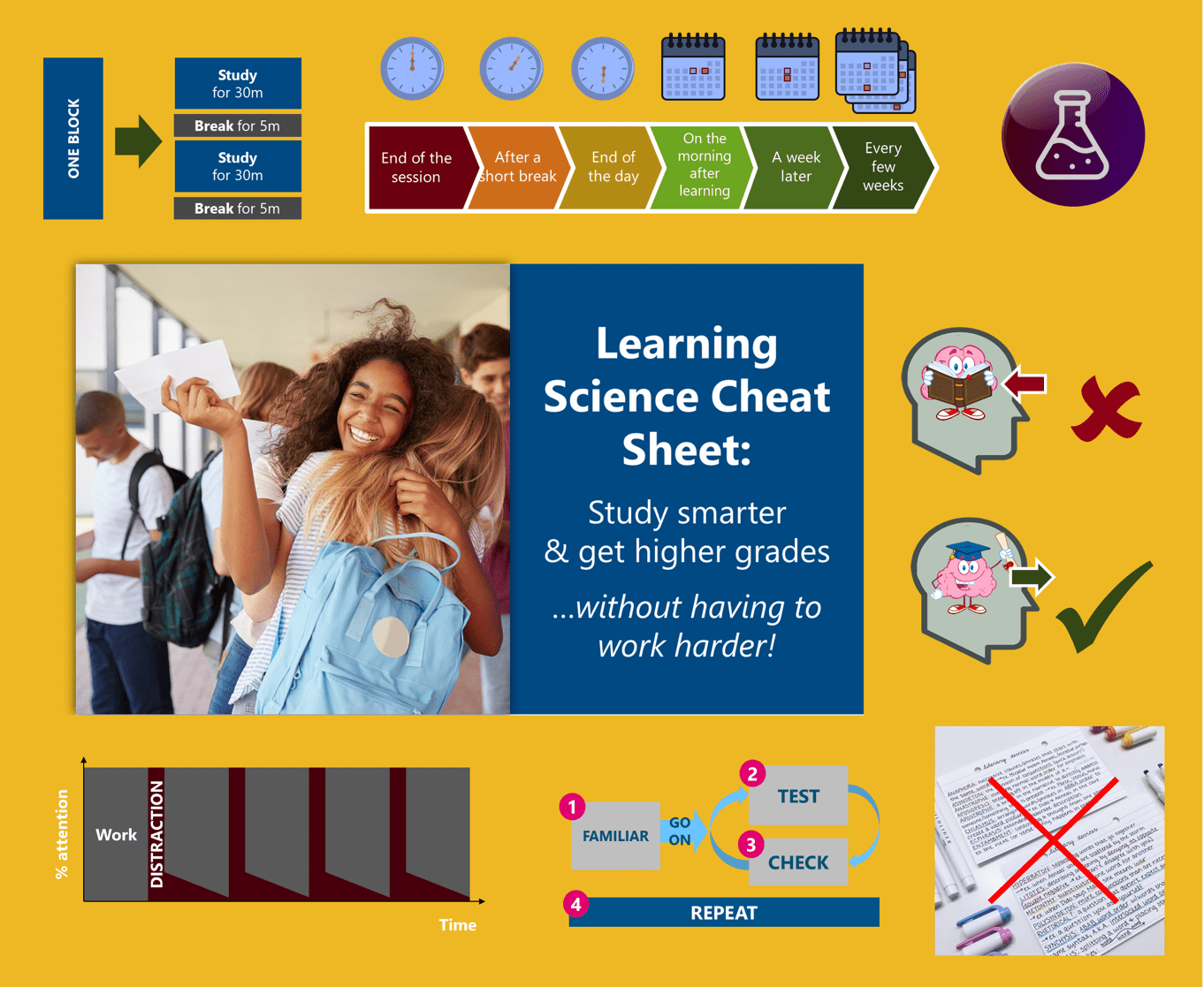
Get a copy of my ultra-concise “6 Pillars Of Exam Success” Cheat Sheet at https://examstudyexpert.com/pillars/
*As an Amazon Associate, we may earn from qualifying purchases, at no extra cost to you. We make these recommendations based on personal experience and because we think they are genuinely helpful and useful, not because of the small commissions received.
Podcast edited by Kerri Edinburgh.

